PORT OF FERNANDINA
Port of Fernandina Operations
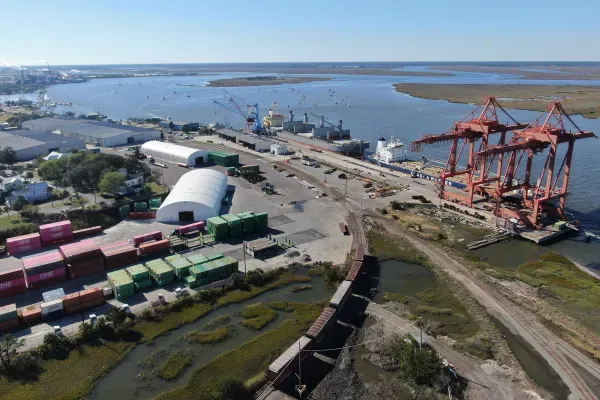
The Port of Fernandina is operated by Relay Terminals under a long‑term contract with the Ocean Highway and Port Authority of Nassau County, Florida. Under this agreement, Relay provides marketing, terminal operations, business administration, and stevedoring services, employing a skilled workforce capable of servicing vessels around the clock.
The container/truck interchange gate is open from 7 AM to 5 PM, Monday through Friday.
The warehouses operate from 7 AM to 4 PM, Monday through Friday, on a straight time basis.
The container interchange gate and the warehouses are equipped to operate on a 24‑hour basis when required.
For additional information on port operations, including current terminal and stevedoring rates, please direct inquiries to:
Relay Marine Terminals
501 N 3rd Street
Fernandina Beach, FL 32034
Phone: (904)-990-1303
Port Features
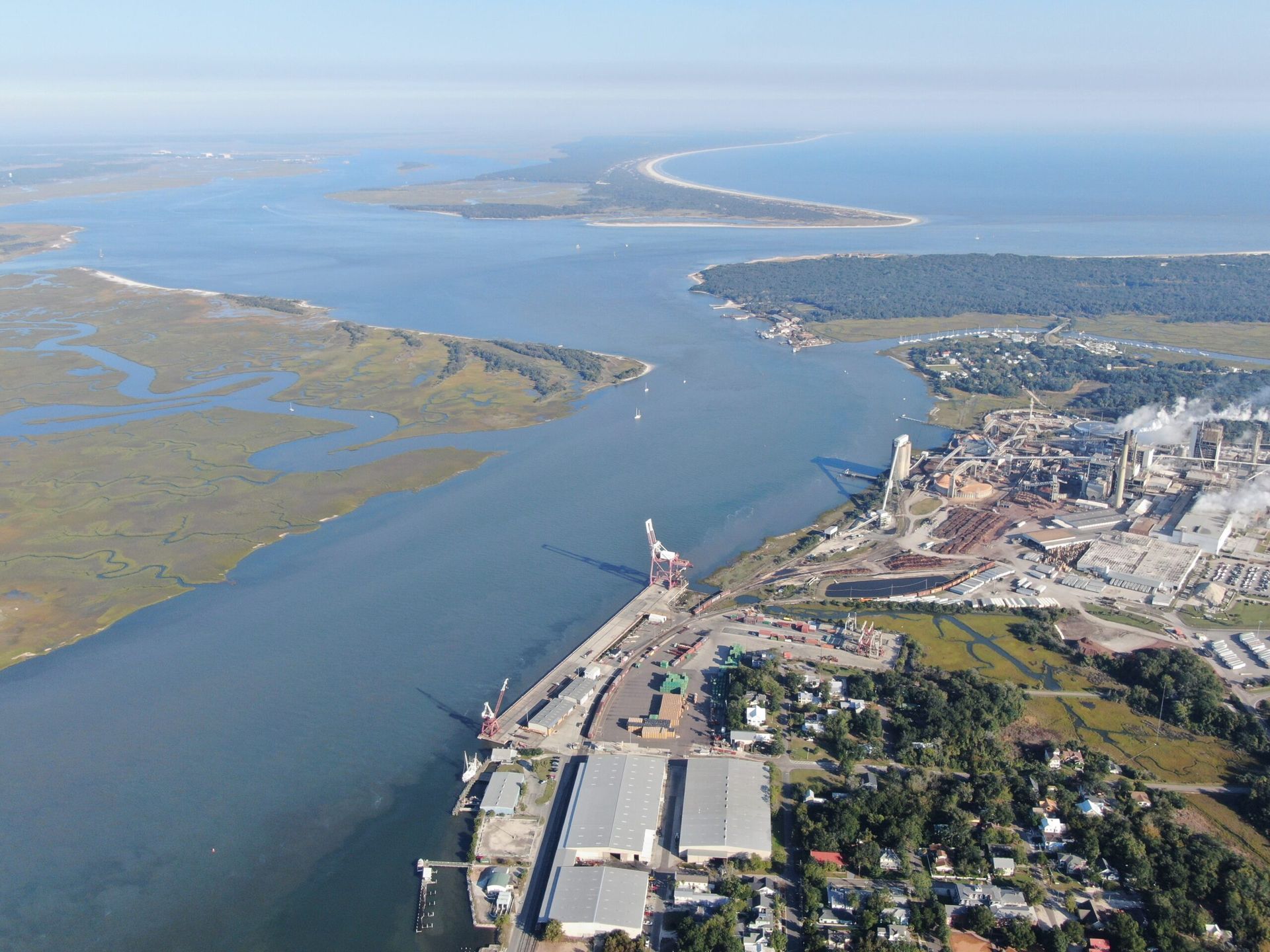
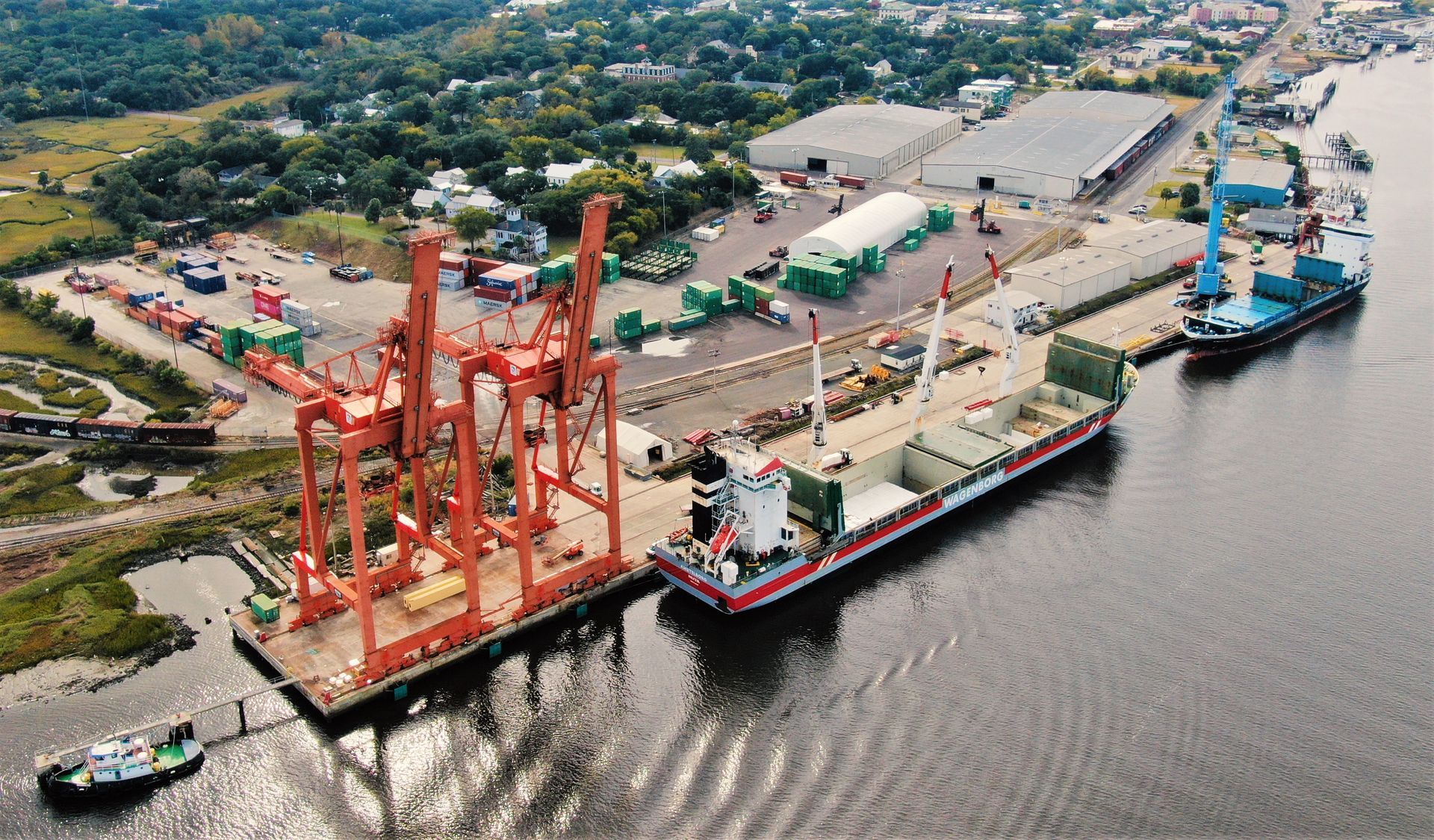
The Port of Fernandina is a rail‑served, natural deep‑water Atlantic port located 2.2 miles from the open ocean, with a 36‑foot MLW channel draft and no overhead obstructions. A 950‑foot turning basin adjoins a 1,200‑linear‑foot pier, supported by available tug services and a typical one‑hour transit from the sea buoy.
The Port handles steel, aluminum, machinery, paper and forest products, and consumer goods, and offers 250,000 square feet of on‑site warehousing, more than 100,000 square feet off‑port, and 10 acres of open storage, all minutes from the six‑lane A1A/SR 200 corridor with direct access to Interstates 95 and 10.
Principal Cargo
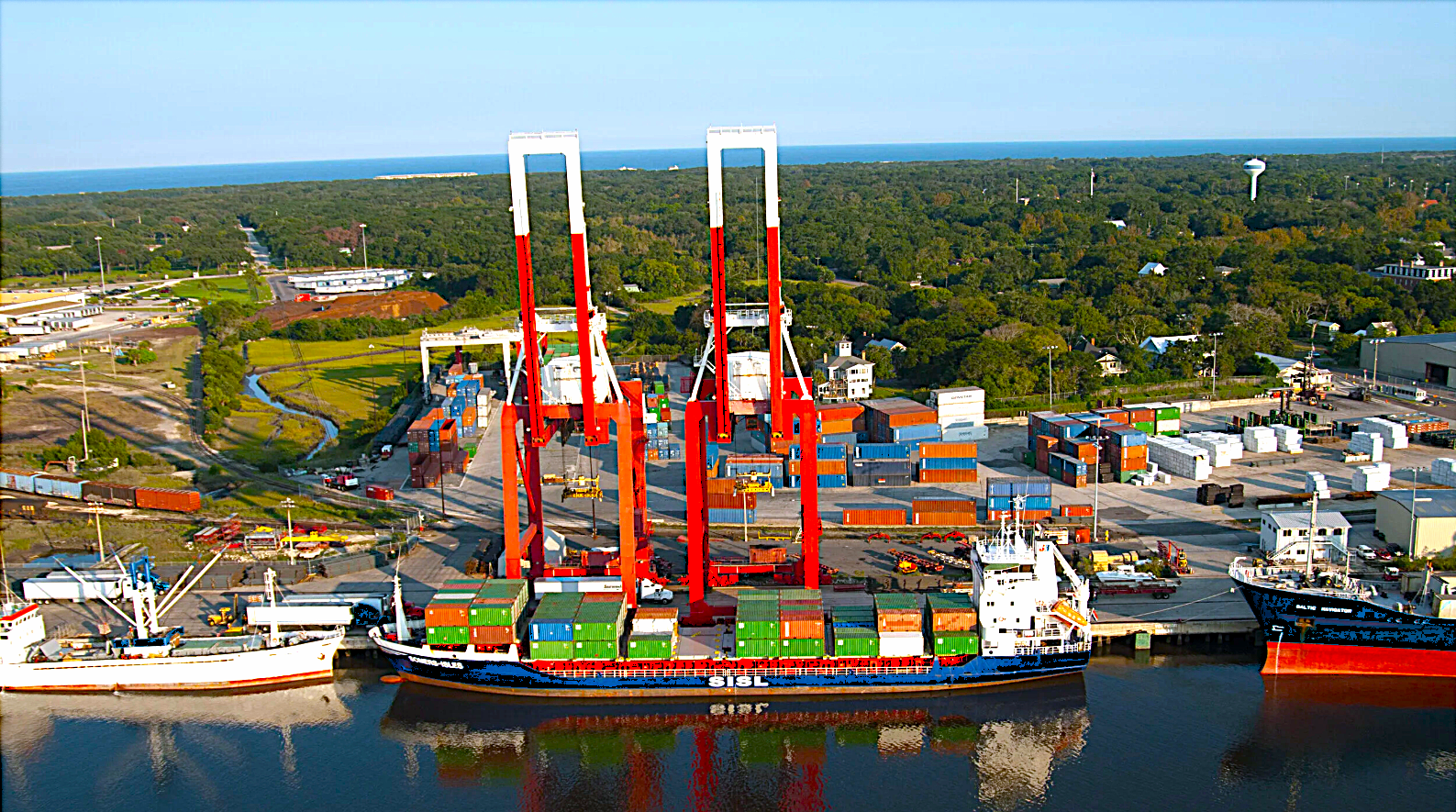
Exports: Forest products including Kraft Liner Board and lumber, machinery, yachts, and steel and aluminum products.
Imports: Steel rebar and wire rod coils, hardwoods, and oats.
The containerized commodities moving through the port include consumer goods, building materials, plastics, beverages, frozen and chilled foods, and newsprint.
Port Specifics
Port Equipment
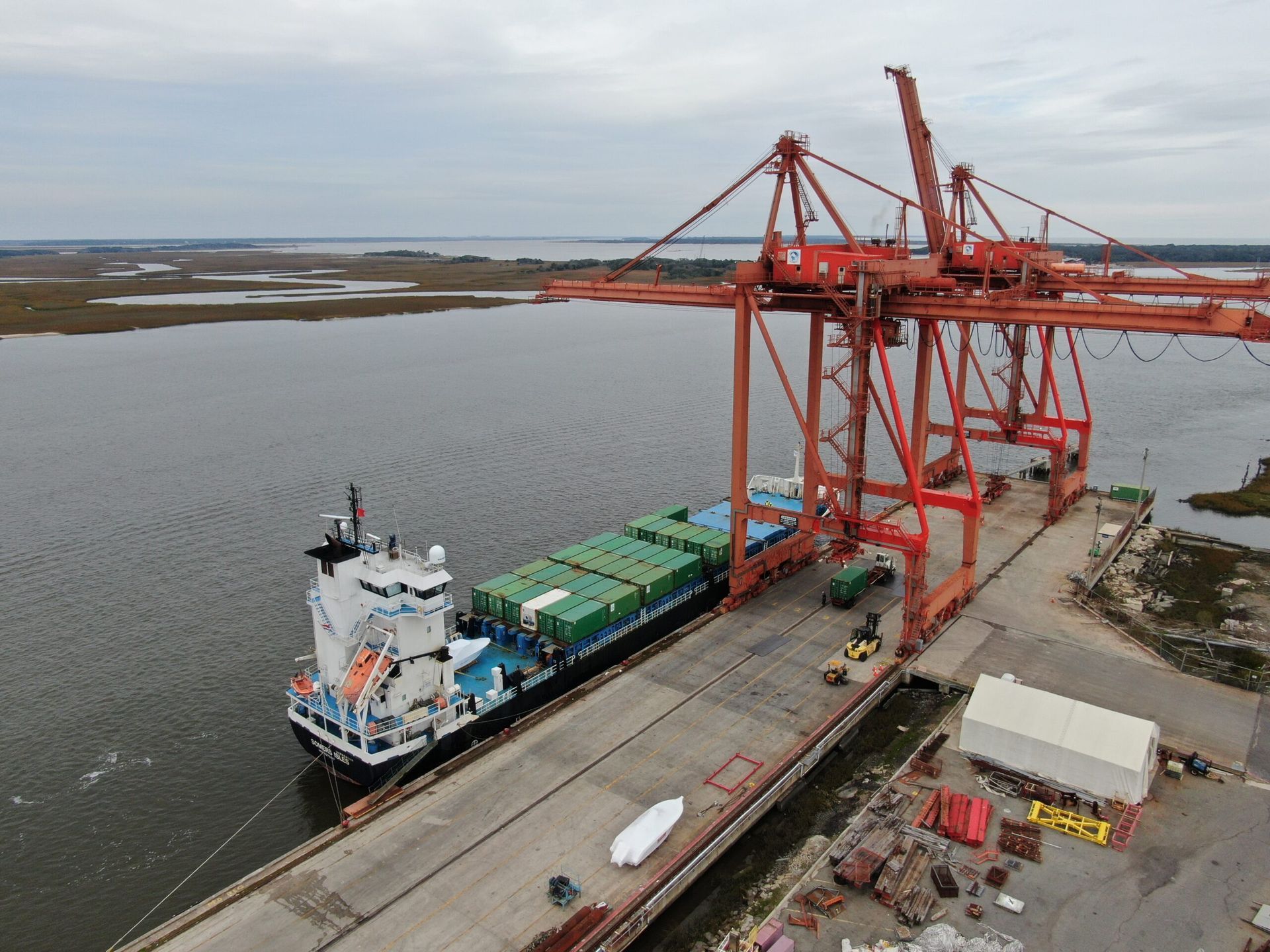
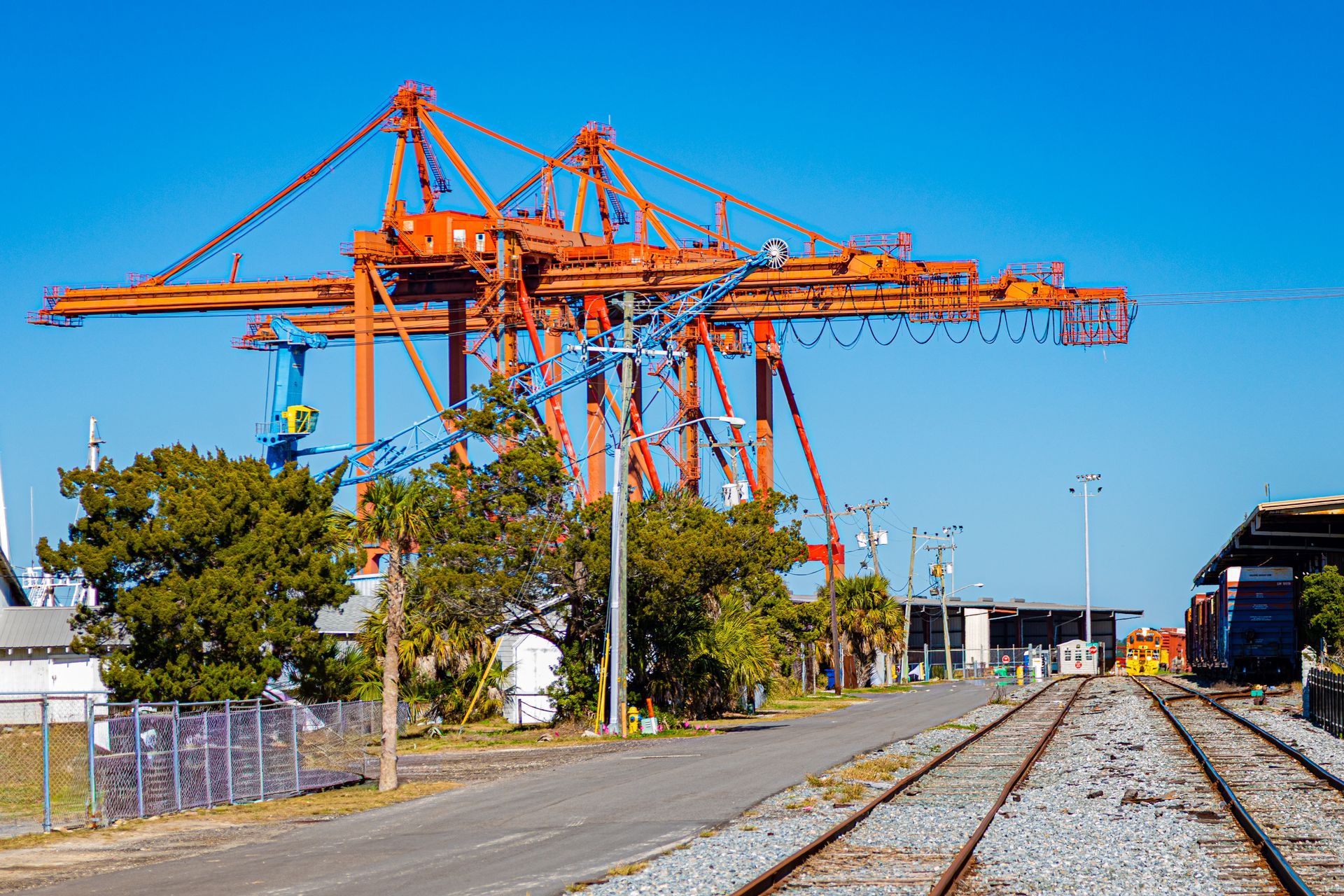
One Liebherr LHM 400 Mobile Harbor Crane
One Container Gantry Cranes – 13 container wide reach
Three Top Loaders
Over 30 Lifts Trucks ranging from 3,000 to 52,000 LBS Capacity
Yard hustlers, flatbeds, yard chassis, and over the road trucks
Berth Information
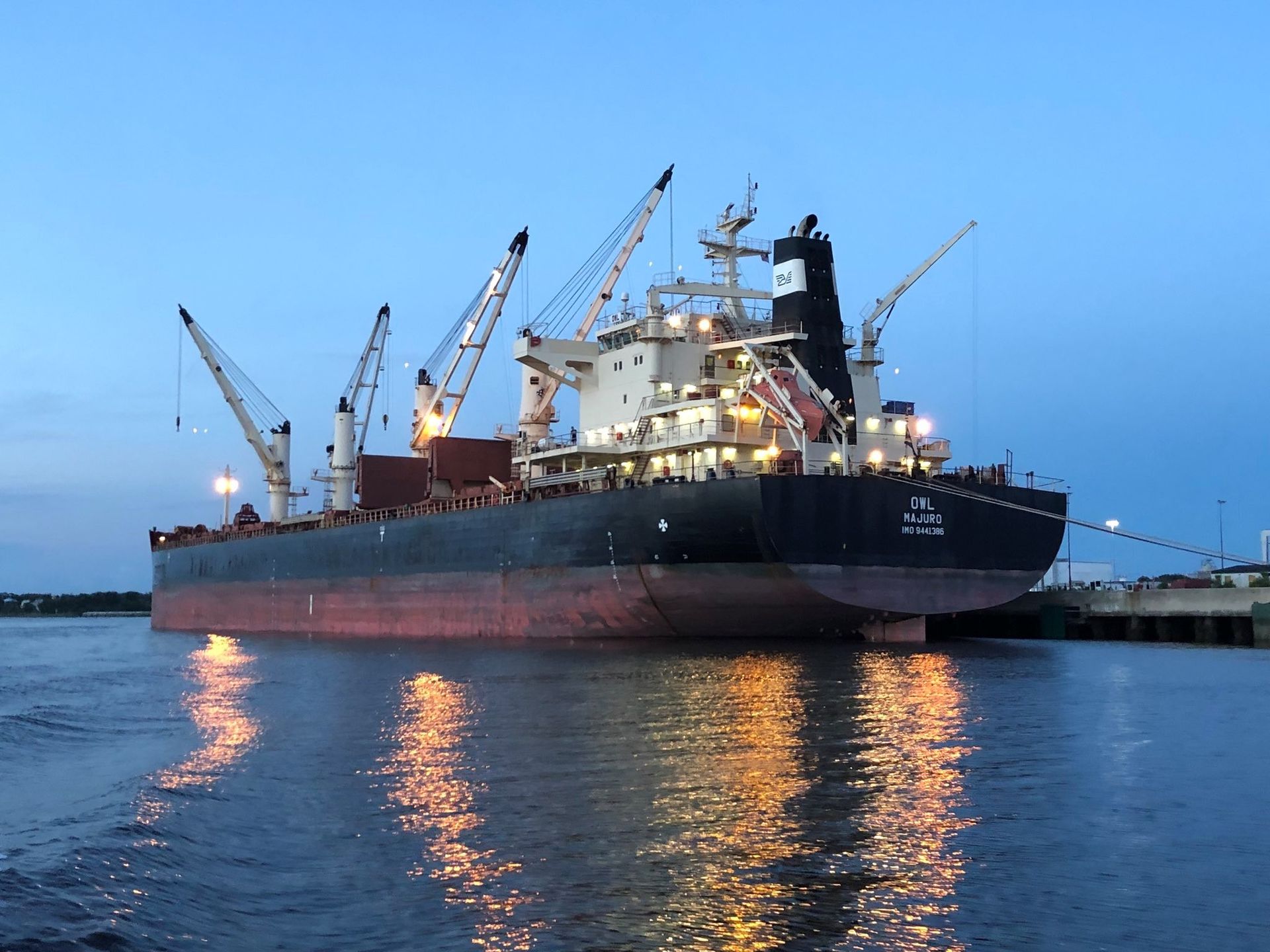
The wharf is 1,200 linear feet and can accommodate two medium sized ships.
Draft alongside the berth is maintained at a depth of 38’ MLW and there is a 6’ rise and fall in the tide.
All berths can handle container or conventional cargo working vessels.
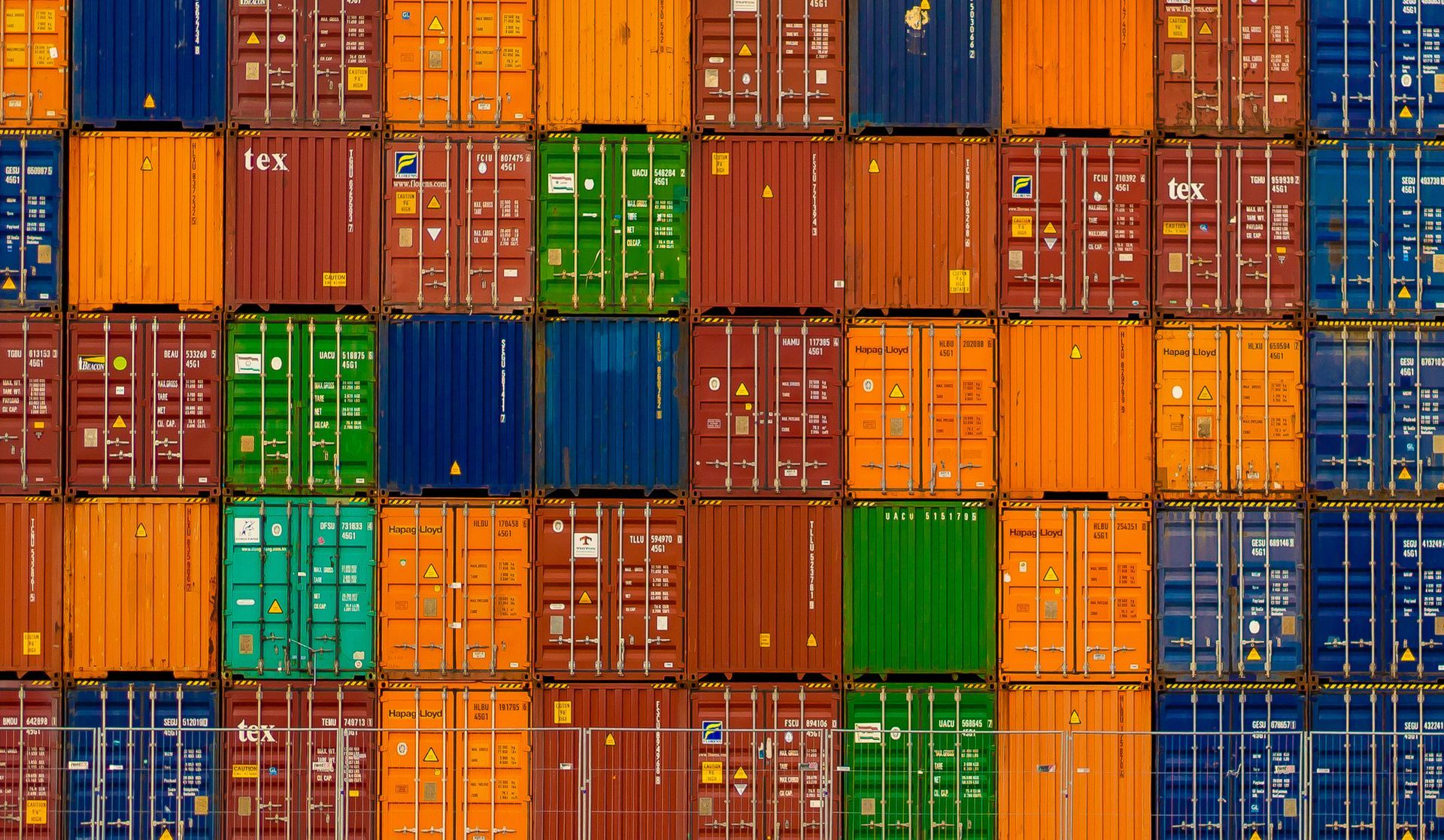
The marshaling area adjoining berths can accommodate approx. 3,200 TEU including 48 electrical hookups for refrigerated containers.
A chassis depot is located near the port with parking for 500 chassis.
Warehouses
The On-The-Port facilities are clean and modern with 250,000 sf of storage space designed for the storage for a variety of cargoes.
The Port also operates a 50,000 sf container freight station.
Covered Storage:
- Three warehouses: 201,000 total sf
- Two sheds - 16,200 total sf
- Two fabric warehouses - 38,498 total sf
- Stuffing & Stripping Warehouse: 50,000 sf
Neutral Chassis Pool: 4 Acres
Container Yard:
- Container Stacking Capacity: 3,200 TEU’s
- Refrigerator Plugs: 48 expandable to 144 over 11 acres
The port provides 5 truck loading/unloading docks located at the warehouses.
Rail Access:
- 11 rail car loading/unloading capacity along the warehouse and an additional overflow track in the terminal yard
Channel Features
The facility is located on the Amelia River approx. 4.5 miles from the Atlantic Ocean.
Located at Latitude 30°41' N and Longitude 81°28' W, the channel provides direct, efficient access to the Atlantic—only about 45 minutes from dockside to open ocean.
Approach: 47 FT MLW
Channel Width: 400 FT
Channel Depth: 36 FT MLW Salt Water
Depth Alongside: 36 FT MLW Salt Water
Tides: 6 FT Average
Dock Height: 12 FT Above Low Water
Berthing Space: 1,200 Linear FT of wharf to accommodate 2 medium ships
Apron Width: 70 to 115 FT
Turning Basin: 1,600 FT North & South; 900 FT East & West
Intermodal System
The Port of Fernandina is a strategically positioned hub supporting all modes of cargo transport. Whether for imports or exports, the Port provides seamless connections to markets across the United States and beyond.
Connected to the USA:
The Port offers direct rail connectivity via CSX Railroad, including Merchant Train service and Double‑Stack Intermodal capability. First Coast Railroad, a Genesee & Wyoming company, provides on‑port short‑line rail operations.
Highway access is equally efficient, with direct connections from SR 200/A1A to Interstate 95, US 301, US 1, US 23, US 90, and Interstate 10.
Within a single day’s drive, trucking routes reach major markets such as Memphis (TN), Charleston (WV), Richmond (VA), Mobile (AL), and all of Florida.
***Report rail emergency directly to CSX: 1-800-232-0144 or click here for the CSX website.
Tariff & Fee Schedule
The Tariff & Fee Schedule can be viewed online & downloaded in PDF form by clicking below.
*Adobe Reader 7 or later required.
View or Download Tariff No. 2025-1
* Rates effective February 26, 2025
View or Download Tariff 2025-1 (One page addendum)
updated 2025.03.25
History of the Port
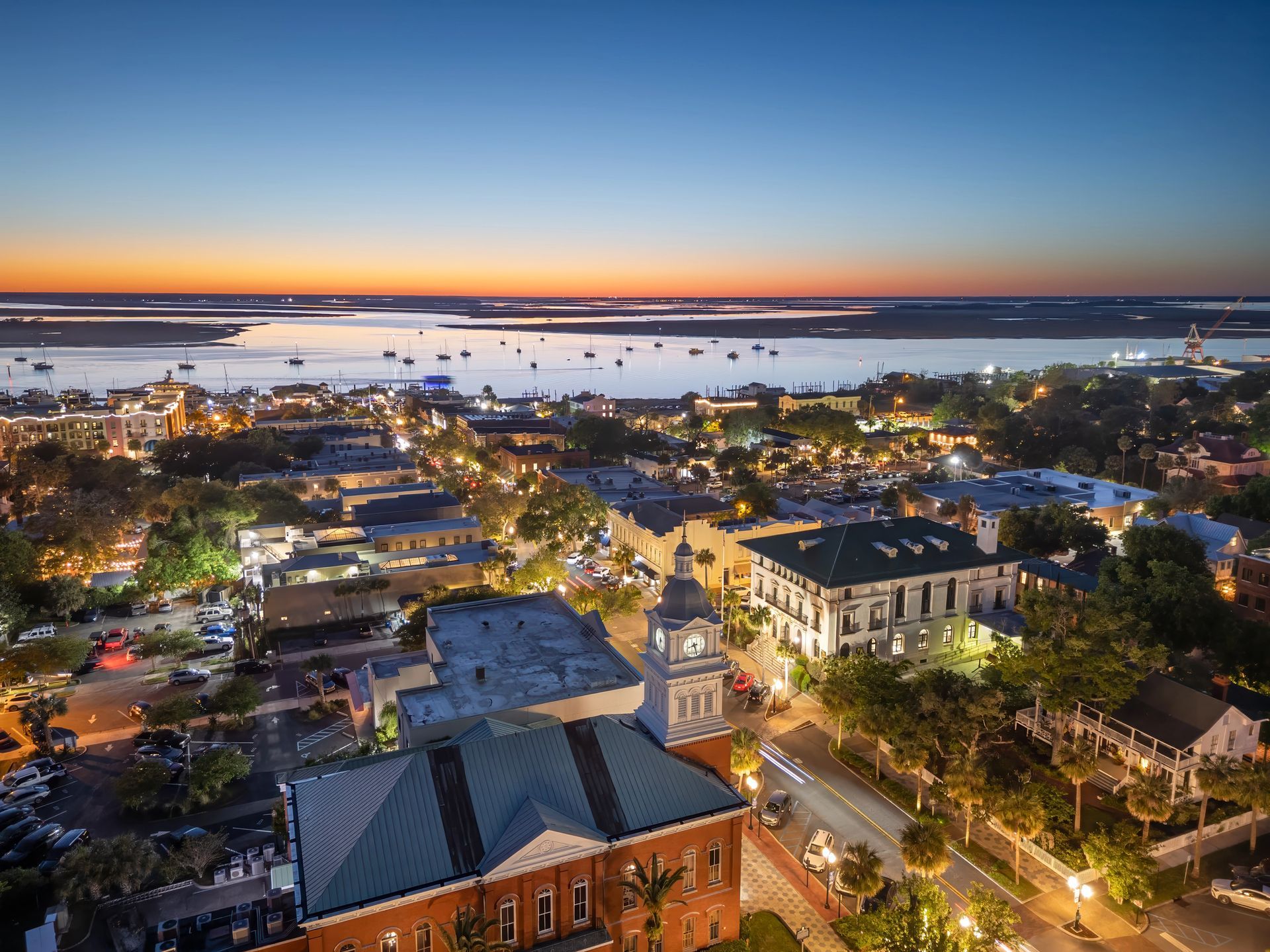
Amelia Island and the City of Fernandina have a long and colorful history. Known as the Isle of Eight Flags, the Island’s deep natural harbor has shaped its role in regional and international trade for centuries.
During the American Revolution, Florida remained loyal to Britain, and Fort Tonyn was established at the Port of Fernandina. Thousands of Loyalist refugees fled south, and by war’s end nearly 16,000 had resettled in Florida.
In 1783, Florida returned to Spanish control, prompting a major exodus through Amelia Island—the primary debarkation point due to its superior harbor.
By 1807, the Jefferson Embargo Act closed American ports to foreign shipping. Still under Spanish rule, Fernandina became the closest “free port” to the United States, attracting smugglers, pirates, and illicit traders who took advantage of its proximity and sheltered harbor.
The United States took control of Amelia Island in 1817 and formally acquired Florida in 1821. Nassau County was established in 1824 with Fernandina as its county seat, and Florida achieved statehood in 1845.
In the 1850s, Senator David Yulee’s cross‑state railroad connected Fernandina on the Atlantic to Cedar Key on the Gulf, channeling goods through the Port for shipment to northern markets. During the sailing‑ship era, Fernandina became the second busiest port in the United States. Extensive wharves, rail facilities, and warehouses soon lined the waterfront.
The Port played a significant role during the Spanish‑American War, serving as a base for shipping military supplies to Cuba. This surge in activity boosted shipments of lumber, cotton, naval stores, and phosphate. Prosperity continued for about two decades before declining due to shifting freight rates and the rise of Henry Flagler’s Florida East Coast Railroad, which redirected major rail‑to‑ship traffic through Jacksonville.
A new era began on December 5, 1985, when the Ocean Highway and Port Authority modernized the Port to leverage a newly deepened entrance channel constructed by the U.S. Navy. Bonds financed a complete transformation—replacing deteriorated pilings with a concrete dock, adding paved marshaling yards, cranes, and new warehouses. These investments revitalized the Port of Fernandina as a key driver of Nassau County’s economic development.
Frequently Asked Questions
Where is the Port of Fernandina located?
The Port of Fernandina is located on the Atlantic East Cost in Northern Florida, on the border of Florida and Georgia.
What are the Major Markets served by this Port?
Major Markets served include Atlanta, Tampa, Orlando, Jacksonville, New Orleans and Houston.
Is this Port the most western port on the East Coast?
Yes, the Port of Fernandina is the most western port on the East Coast expediting access into the Midwest & Great Lakes Region.
How long is the running time to the berth?
Approximate running time to the berth is one hour. One and one half hour during Right Whale calving season from November to April.